When panic sets in during a high-rise fire emergency, people often grab whatever protection is nearby—or worse, attempt to hold a wet cloth over their face. In an environment saturated with carbon monoxide and hydrogen cyanide, common cloth barriers offer zero active protection.
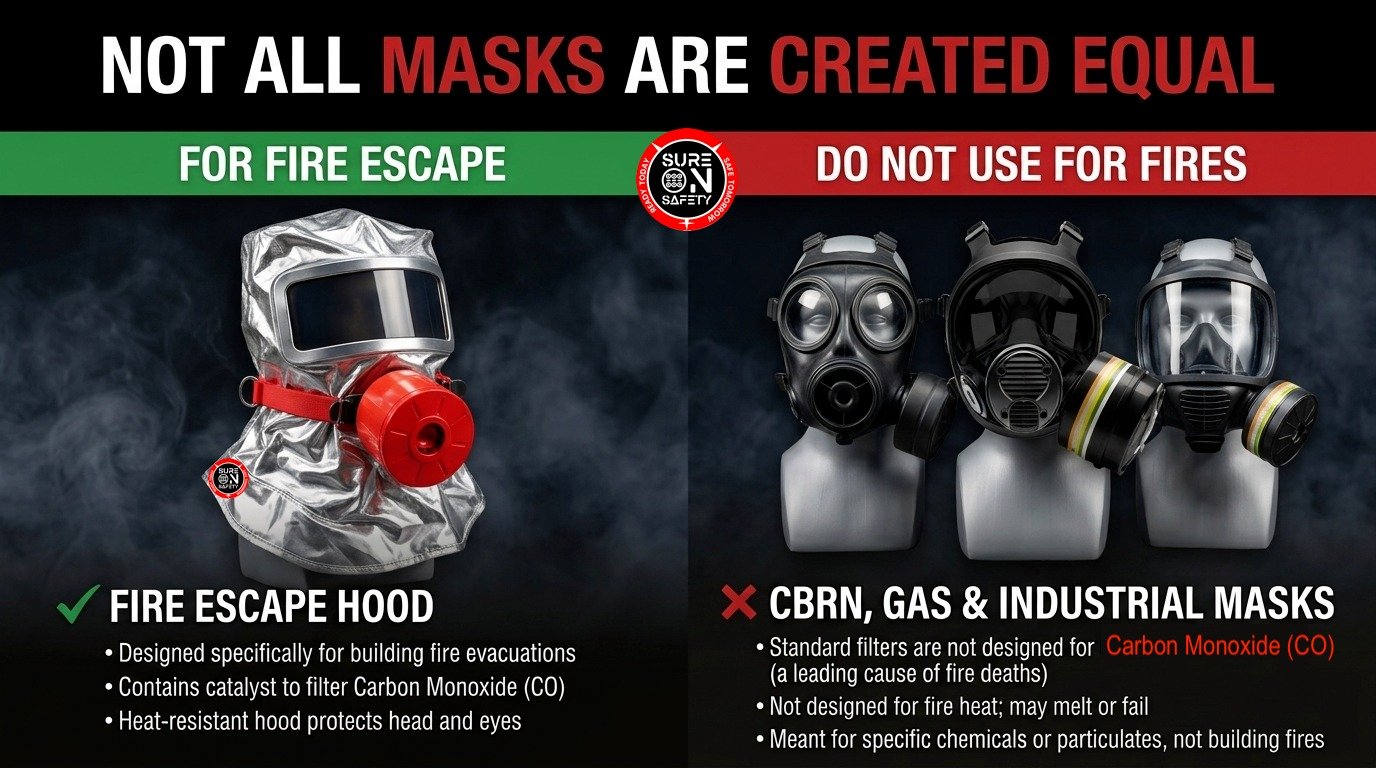
True emergency respiratory defense requires engineering built on rigorous international standards. Not all masks or hoods found on the market are certified to handle the thermal and chemical realities of a structural building fire.
THE STANDARD THAT MATTERS: EN 403
When evaluating personal escape equipment, compliance is everything. The EN 403 standard specifically governs filtering escape devices for fire. Devices meeting this standard are rigorously tested to ensure they block toxic gases and particulate smoke for a minimum operational window.
"A filter that protects against dust is entirely useless against carbon monoxide. In a high-rise fire, gas toxicity is the primary hazard."
KEY FEATURES OF PROFESSIONAL ESCAPE HOODS
An effective personal evacuation kit (PEEK) must account for panic, zero visibility, and extreme microclimate stress. Key engineering features include:
- Full Head and Neck Coverage: Protecting not just the airways, but shielding the skin and hair from radiant heat and falling embers.
- Integrated Gas Canister: Multi-layer filtration specifically targeting carbon monoxide, acrolein, hydrogen chloride, and hydrogen cyanide.
- One-Size Universal Fit: Designed with elastomeric seals that deploy securely in seconds without requiring adjustment or prior training.
Preparedness is not about having equipment—it is about having the right equipment certified for the exact threat you face.