Fire alarms do not discriminate.
But evacuation does.
In multi-storey buildings, evacuation plans often assume one thing: that everyone can use the stairs quickly and independently.
That assumption fails for:
- Elderly residents
- Pregnant women
- Individuals recovering from injury or illness
- People with temporary mobility limitations
- Those with permanent physical disabilities
When lifts are shut down, the only route out is usually the stairwell. And stairs are not neutral territory for everyone.
THE PROBLEM NO ONE TALKS ABOUT
In an emergency:
- Speed matters
- Air quality may deteriorate
- Visibility may reduce
- Panic may spread
Now add limited mobility into that environment.
Without structured support, evacuation becomes slower, more stressful, and potentially dangerous for both the individual and those attempting to assist.
Good intentions are not a plan.
WHY EVACUATION CHAIRS MATTER
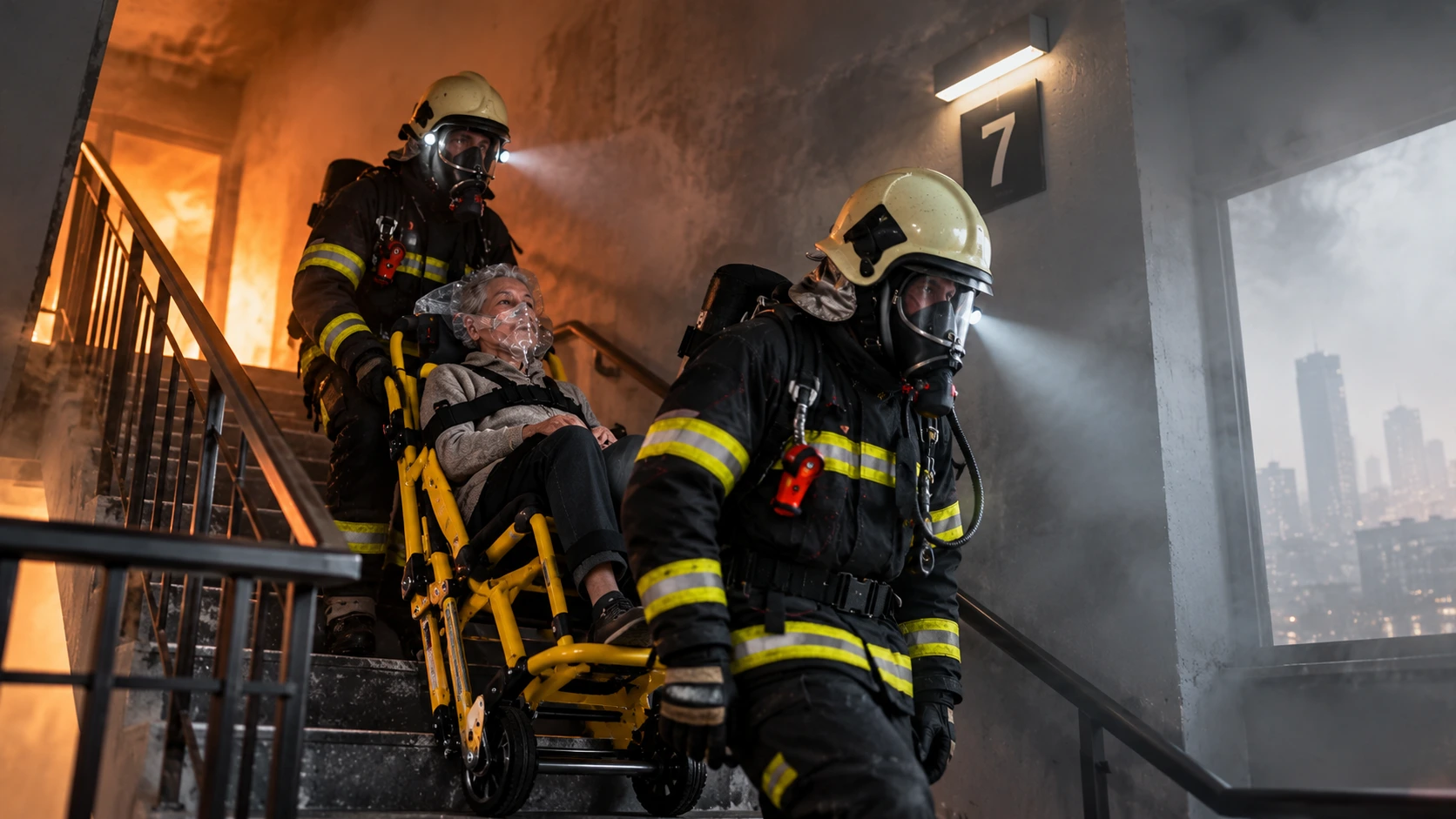
Evacuation chairs are designed specifically for assisted stair descent during emergencies.
They provide:
- Controlled movement down staircases
- Reduced physical strain on helpers
- Greater stability compared to manual carrying
- A structured method instead of improvisation
Instead of two or three people attempting to carry someone down flights of stairs, the chair enables safer, more controlled evacuation with significantly less risk.
It protects the individual.
It protects the helpers.
It protects the building operator from unmanaged risk.
DUTY OF CARE IS NOT OPTIONAL
Buildings increasingly house mixed populations. Residents age. Guests vary in ability. Conditions change without notice.
An evacuation plan that does not account for mobility limitations is incomplete.
Assisted evacuation equipment is not about assuming weakness. It is about planning for reality.
Emergencies do not wait for ideal circumstances.
Prepared buildings account for everyone.